


Why Paper Plates Are the Perfect Rainy Day Craft
When the rain is drumming against the window and the "I'm bored" chorus has begun, you need a craft that takes thirty seconds to set up and can be abandoned halfway through without tears. Paper plates are ideal. They are sturdy enough to hold their shape once painted, soft enough for small hands to cut, and cheap enough that nobody minds if a project ends up in the recycling bin by teatime. A pack of fifty costs very little, and one plate can become a mask, a flower, a puppet or the body of a dragon depending on the mood of the afternoon.
The real beauty of them is the way they suit a range of ages. A three-year-old can slap paint on a plate and call it a lion. A nine-year-old can add curled paper manes, a hinged jaw and a name for the character. Set everything out on the kitchen table, put the kettle on, and let the day unfold at its own pace.
Stocking a Basic Craft Cupboard
You do not need a specialist kit. Most of these items are already lurking in a drawer, and anything missing can be picked up on the next supermarket shop.
- Paper plates in white and a few bright colours, plus a couple of sturdier ones for bases that need to hold weight
- PVA glue in a small pot, applied with a cotton bud or a cut-down paintbrush for less mess
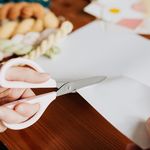
- Child-safe scissors for little ones, and a pair of sharper ones kept for adult use
- Ready-mixed paint or felt tips, plus a few chunky brushes
- Googly eyes, pom-poms, coloured card and tissue paper for adding character
- Lolly sticks, elastic and a hole punch for handles and mask straps
- Sticky tape, a stapler and split pins for anything that needs to move
Animal Masks That Actually Stay On
Masks are the most popular paper plate project, and a little forward planning makes them wearable rather than wobbly. Start by drawing round the child's face on the back of the plate and marking where the eyes should go. An adult should cut the eye holes with a craft knife or sharp scissors, then hand the plate back for decorating.
For a lion, paint the plate golden yellow and let it dry. Then snip into the outer rim all the way round, about two centimetres deep, to create a fringe. Curl each strip around a pencil and hold it for a few seconds so it springs into a mane. For an owl, cut two large circles from a second plate for the eyes, add a triangle beak and draw scalloped feathers with a felt tip. A rabbit works well if you fold the plate in half, cut two long ears from the offcuts and staple them behind the top edge.
To finish, punch a hole on each side and thread through a length of elastic measured loosely around the head. Knot it, try it on, and adjust before the parade begins.
Bright Flowers and Indoor Gardens
Paper plate flowers are wonderfully forgiving and make cheerful decorations for a windowsill or a bedside shelf. Turn a plate into a daisy by cutting triangular notches around the rim to create petals, then folding every other petal gently upwards so the flower has some depth. Paint the centre in a warm yellow and the petals in whatever shades take your fancy.
For a sunflower, glue a smaller plate into the middle and fill it with dried pasta shapes, sunflower seeds or scrunched-up brown tissue paper. A bouquet can be made by taping each flower to a garden cane wrapped in green crepe paper, or by cutting out the centre of a plate to make a ring and covering it with tissue paper scrunches for a wreath. Group them in a jam jar and you have a centrepiece that costs pennies.
Quirky Puppets and Storytelling
The classic folded plate puppet never loses its charm. Fold a plate in half, then decorate the top half as the forehead of a creature and the bottom half as the jaw. Paint a frog in bright green with a long red felt tongue, a monster in purple with zigzag teeth cut from white card, or a dragon with paper flames. Slide your fingers inside the fold and the mouth opens and closes as you talk.
Once two or three puppets exist, the afternoon turns into a performance. Drape a cloth over the back of a sofa or the kitchen table and you have an instant theatre. Ask the children to invent a short story with a beginning, a muddle and an ending, then put it on for anyone who will watch.
Keeping the Mess Manageable
Cover the table with an old shower curtain or a wipe-clean cloth, and put aprons on before the paint comes out. Keep a damp flannel nearby for hands and a lidded pot for brushes. If a plate feels flimsy, glue two together back to back before decorating, and remember that thicker layers need longer to dry, so paint in one session and add eyes and embellishments the next morning.
Most importantly, resist the urge to correct wonky eyes or uneven petals. The charm of handmade things is in their imperfection, and a lopsided lion made on a wet Tuesday will be far more treasured than anything perfectly symmetrical. When the sun finally returns, peg the finished pieces along a hallway string and admire the collection before the next rainy day arrives.


John Doe
14 January, 2022Having no content in post should have adverse..
Chauffina Carr
10 April, 2022We use these tests all time! Killer stuff!
Jim Séchen
16 July, 2022Thanks for all the comments, everyone!