

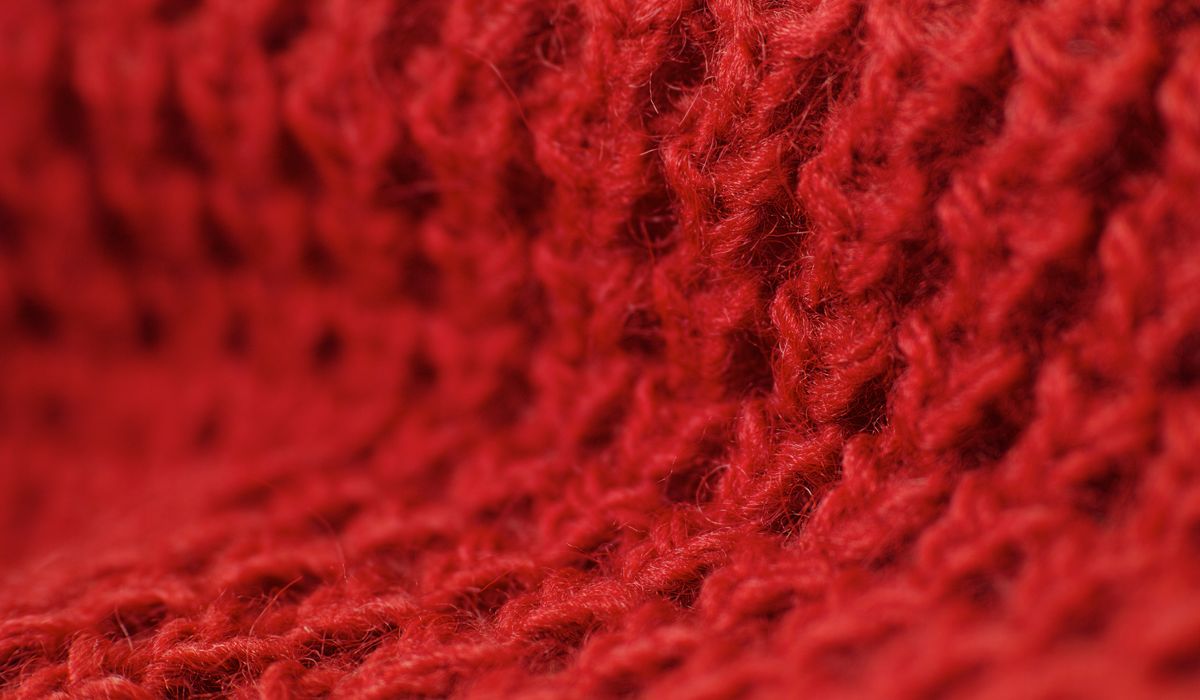
Start With Fibre: What Your Yarn Is Made From
Before you fall in love with a colour, take a moment to think about what the yarn is actually made of. Fibre content determines how your finished knitting will behave, and choosing badly here is the single most common reason beginners end up disappointed with a project that was perfectly well knitted.
Wool is the traditional starting point, and for good reason. It is springy, forgiving and holds its shape, which means small tension wobbles tend to block out rather than glare at you. Pure wool can feel scratchy against the neck, so for anything worn close to the skin, look for softer breeds or a wool blended with a little alpaca or silk.
If you want something affordable and easy to wash, acrylic is your friend. It is durable, comes in an enormous range of colours and is ideal for children's jumpers, blankets and anything that will be thrown in the machine. Its weakness is that it does not breathe as well as natural fibres and can pill over time.
Plant fibres such as cotton and linen behave quite differently. They have less stretch, so they are wonderful for summer tops and bags but unforgiving on your hands and on your tension. Cotton also has a tendency to grow lengthways once washed and worn, so bear that in mind if you are knitting a long garment.
- Wool — warm, elastic, brilliant for winter garments and cables.
- Acrylic — budget-friendly, machine washable, great for beginners and children.
- Cotton — cool and crisp, but heavy and lacking in stretch.
- Blends — often the best of both worlds; a wool and acrylic mix is a forgiving choice.
Match the Yarn Weight to Your Pattern
Yarn weight has nothing to do with how heavy the ball is. It refers to the thickness of the strand, and it dictates which needle size and tension will work. Most beginner patterns in the UK will call for double knitting (DK) or aran weight yarn, and that is exactly where you should start. Both are thick enough to see your stitches clearly and knit up quickly enough to keep you motivated.
Chunky and super chunky yarns are tempting because projects finish fast, but they can be hard on the wrists and they hide mistakes less well than you might hope. Lace and 4-ply yarns, meanwhile, produce beautiful fabric but demand consistent tension and a great deal of patience. Save those for your third or fourth project.
Always check the recommended needle size on the ball band and the tension square given in your pattern. If your pattern says 22 stitches to 10cm and your yarn suggests a different figure, the finished garment will not fit the way the designer intended. Knitting a small tension square takes half an hour and saves weeks of heartache.
Feel for Drape and Squish
Drape is the way fabric falls, and it matters more than most beginners realise. Hold a skein against your cheek, squeeze it, and let a length dangle from your fingers. If it feels stiff and wiry, it will knit into a dense, structured fabric — perfect for a bag, a hat or a cushion cover. If it feels soft, fluid and slightly floppy, it will drape beautifully in a scarf or a loose cardigan.
The "squish" test is just as useful. Press the ball gently. A yarn that springs back into shape has good memory and will help your ribbing and cuffs stay put. A yarn that stays flattened will sag over time, particularly at cuffs and necklines. This is one of the reasons pure wool remains such a reliable choice for anything that needs to hold its shape.
Where possible, buy from a shop where you can touch the yarn before committing. Online shopping is convenient, but photographs flatter, and the difference between a yarn that feels lovely in the hand and one that feels like string is impossible to judge from a screen.
Read the Ball Band Like a Pro
Every ball of yarn carries a small label packed with information, and learning to read it will make you a more confident knitter almost immediately.
- Fibre content — usually given as percentages, with the largest component first.
- Weight category — DK, aran, chunky and so on, sometimes with a number from one to six.
- Tension and needle size — your starting point for a tension square.
- Length in metres — far more useful than the weight in grams when calculating how much you need.
- Dye lot number — buy all your yarn from the same lot so the colour matches throughout.
- Care instructions — whether it can be machine washed, and at what temperature.
That dye lot number catches people out constantly. Two balls that look identical on the shelf can knit up as noticeably different shades if they came from separate batches, and the difference is often invisible until the garment is finished and worn in daylight.
Building a Sensible Beginner Stash
You do not need a cupboard full of yarn to get started. Begin with two or three balls of a smooth, light-coloured DK yarn in a wool and acrylic blend, plus a pair of 4mm needles. Light colours let you see your stitches clearly, and smooth, tightly plied yarn does not split as you work, which makes learning far less frustrating than fighting with a fluffy, dark mohair.
As you gain confidence, add a cotton for washcloths and bags, a soft merino for garments and a chunky yarn for quick weekend projects. Buy for a specific project rather than accumulating yarn you may never use, and keep the ball bands in a bag with any leftovers so you can match them later.
Finally, do not be afraid to unravel and start again. Every knitter does it, and a yarn that has been knitted and ripped back a few times will still produce something lovely. Choose yarn you enjoy touching, and the rest of the learning will follow naturally.



John Doe
14 January, 2022Having no content in post should have adverse..
Chauffina Carr
10 April, 2022We use these tests all time! Killer stuff!
Jim Séchen
16 July, 2022Thanks for all the comments, everyone!